THEATRE FOR DEMOCRACY, 19th-20th JUNE’26
ZABRZE, 19 JUNE
The event began outside Kino Roma with a live performance by Meinusch Project, creating an open and welcoming atmosphere for participants and local residents. Families and children joined community activities, including outdoor chalk drawing, while young performers, guests and visitors had an opportunity to meet before the performances.
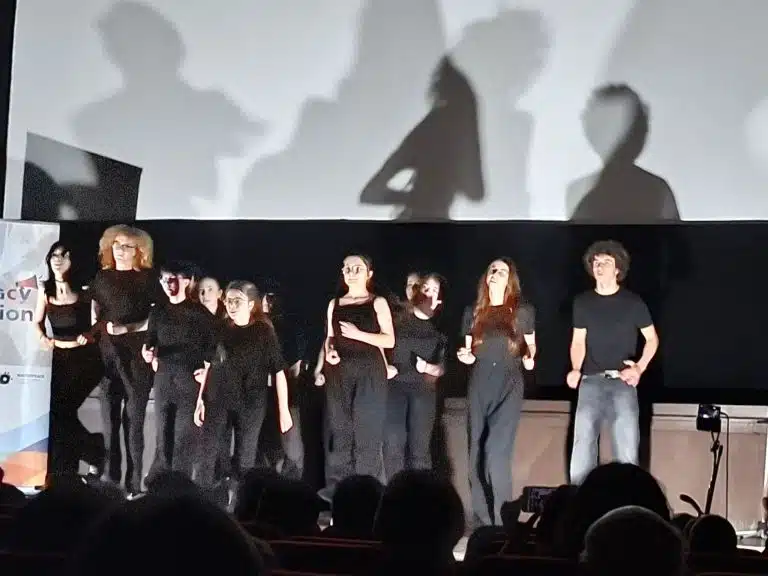
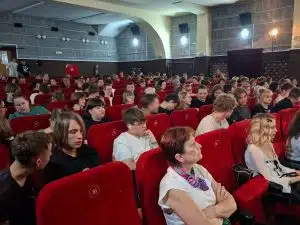
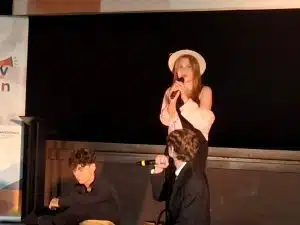
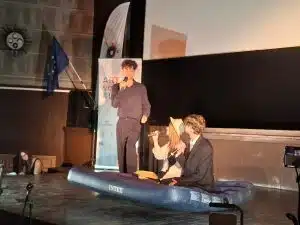
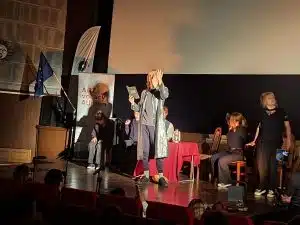
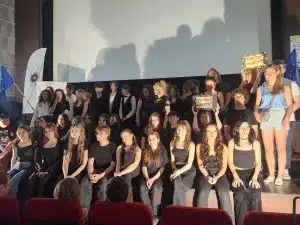
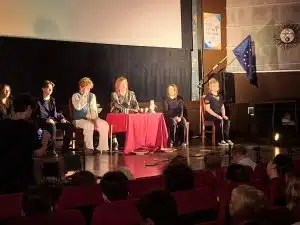
Inside the cinema, four youth groups presented theatre performances created during the Polish implementation of the project: “Tratwa”, “I Ty tu widzisz wiatraki?… biedaku…”, “Majn sztetełe…” and “Witajcie w 2026”. Each performance approached civic and social issues from a different perspective and was followed by informal conversations with the audience.
The event brought together young performers, teachers, theatre professionals, representatives of local authorities, international partners from Belgium and the Netherlands, and members of the local community. The day concluded with a shared meal, creating additional opportunities for networking and exchange of experiences.
ACHIEVED RESULTS
The showcase successfully demonstrated the diversity of artistic approaches developed within the project while highlighting theatre as a powerful tool for dialogue and civic participation.
The event attracted not only invited guests but also members of the local community and passers-by, including visitors from Germany who decided to join the audience after encountering the activities taking place outside the venue.
The performances received very positive feedback from participants, guests and representatives of local authorities. Following the event, representatives of the organising team were invited to the Zabrze City Hall to present the project and discuss its outcomes.
The event was also acknowledged publicly through social media posts published by the City of Zabrze and Senator Halina Bieda, contributing to the project’s visibility and strengthening relationships with local stakeholders.
KATOWICE, 20 JUNE
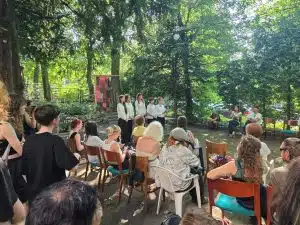
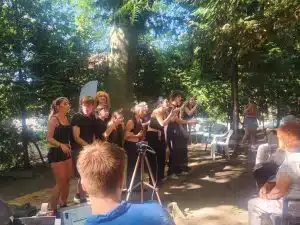
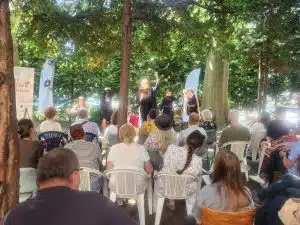
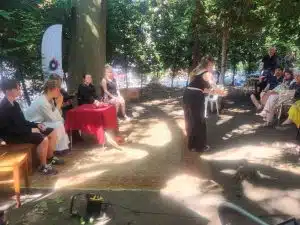
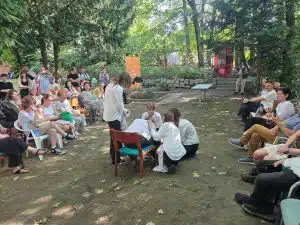
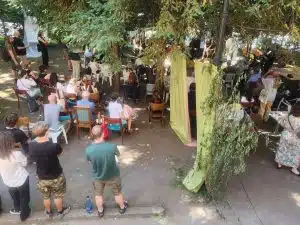
As part of the Small Festival of Great Literature in Katowice, three theatre groups participating in the Artvocacy for the Union project presented their performances in the garden of Dom Śląski.
The audience watched “I Ty tu widzisz wiatraki?… biedaku…”, “Witajcie w 2026” and “Sceny ze współbycia”, each exploring civic and social themes through different artistic approaches.
Unlike the previous day’s showcase in Zabrze, the performances took place in an open-air festival setting, reaching visitors who had not specifically come to attend a theatre event. The presentation created opportunities for spontaneous encounters between young performers and
● Presentation of three youth theatre performances during the Small Festival of Great Literature.
● Informal discussions with festival visitors.
● Exchange of experiences between project partners and guests.
Networking with representatives of cultural institutions and local stakeholders. in case of the training
● To present the Polish outcomes of the Artvocacy for the Union project to a broader
audience.
● To introduce participatory theatre into an established cultural festival.
● To encourage dialogue between young performers and members of the local community.
● To promote theatre as a tool for civic engagement beyond traditional theatre spaces. in case of the training
● Increased visibility of youth-created theatre among new audiences.
● Strengthened links between civic education and cultural events. New opportunities for dialogue between young people and local stakeholders.
● Increased awareness of the project among festival participants, members of the public. The event was also attended by a representative of Gerador, the Portuguese project partner, who hadtheopportunitytoobserve thePolish implementation of the
project and exchangeexperiences withparticipantsandorganisers.
ACHIEVED RESULTS
Presenting the performances within an established cultural festival significantly expanded the project’s visibility and introduced its ideas to a new audience. The open setting demonstrated that participatory theatre can successfully become part of wider cultural events and engage people who might not normally attend youth theatre performances. It also confirmed that the performances developed during the project could successfully adapt to very different conditions, moving from a professional theatre venue to an open-air festival space without losing their artistic quality or educational value.
The performances also initiated dialogue beyond the festival itself. Following the event, questions were raised by representatives of the City of Katowice regarding the interpretation of some artistic content. This resulted in a constructive meeting during which recordings of the performances were reviewed and the educational objectives of the project were discussed. The conversation ultimately strengthened mutual understanding of the project’s aims and highlighted the value of theatre as a catalyst for civic dialogue, even when it provokes different interpretations.